
Why Remodeling Can Stir Up Hidden Pest Activity
Home renovations have a way of revealing things you never expected to find. Pull out an old cabinet and you may discover a forgotten plumbing repair. Open a wall and suddenly you’re looking at wiring that clearly belongs to another decade. Sometimes, you also uncover pests that had been living quietly out of sight.
Remodeling itself doesn’t create a pest problem, but construction can disturb insects and rodents that were already inside the structure or nearby. Removing drywall, replacing flooring, opening soffits, repairing roofs, and tearing out cabinets can disrupt nesting and hiding areas. At the same time, doors may stay open longer, building materials may sit outside, and temporary gaps can give pests new ways to get indoors. That makes renovation a surprisingly common time for homeowners to notice pest activity they hadn’t seen before.
Why Pests Suddenly Appear During Renovations
Many household pests spend most of their time in places people rarely see. Cockroaches can hide around plumbing penetrations and inside wall voids. Ant colonies may be established beneath slabs, around foundations, or inside damaged wood. Rodents can travel through attics, crawlspaces, wall cavities, and utility openings without spending much time in the living areas of a home. Renovation changes those environments.
Removing cabinets may eliminate a protected hiding place. Opening a wall can expose pathways insects have been using for months. Attic work can disturb rodents nesting near insulation. Excavation around the foundation may disrupt
ants or other insects living in the soil. Once their shelter is disturbed, pests may move deeper into the structure or become visible as they search for another place to hide. That can make it seem as though the renovation caused an infestation overnight. In many cases, the work simply exposed activity that had previously gone unnoticed.
WHAT CAN STIR UP PEST ACTIVITY?
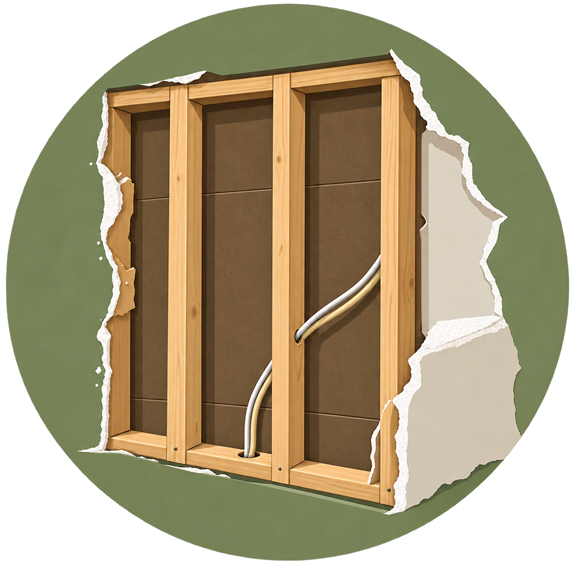


Seeing pests after one of these changes doesn’t necessarily mean the house suddenly has a major infestation. It does mean there is a reason to pay attention. Renovation can provide a rare look at areas that will soon be closed up again, making it a useful time to investigate what is happening behind the finished surfaces.
Demolition Can Expose Problems That Were Already There
The demolition phase is especially good at uncovering pest evidence. Homeowners may find droppings behind appliances or cabinets, damaged insulation in an attic, nesting material inside walls, insect remains, gnawed materials, mud tubes associated with subterranean termites, or areas where moisture has allowed pest activity to develop. Some discoveries are old and inactive. Others point to a current problem. It is worth determining which is which before new drywall, cabinets, flooring, or insulation covers everything again.
This is particularly important if the renovation exposes structural wood. Termite damage, carpenter ant activity, wood decay, and moisture problems are much easier to see when framing is uncovered. Simply replacing the finished surface without addressing an active pest or moisture issue can hide the problem rather than solve it.
Kitchens And Bathrooms Deserve Extra Attention
Kitchen and bathroom renovations frequently expose the exact places where pests find food, moisture, and access through the structure.
When cabinets and vanities are removed, take a close look around plumbing lines. Gaps around pipes can become travel routes for insects and rodents. Moisture around sinks, tubs, toilets, dishwashers, or old plumbing connections can also create conditions that support certain pest problems. This is an ideal time to seal unnecessary openings before new cabinetry goes in.
The same applies to areas behind appliances. Once a refrigerator, stove, dishwasher, or washing machine is moved, the space behind it becomes accessible. Look for droppings, insect debris, damaged materials, grease buildup, moisture, and openings around pipes or wiring. Once the renovation is complete, some of these areas may not be easy to inspect again for years.
Don’t Seal An Active Pest Problem Inside
Sealing openings is useful, but timing matters. If rodents or other animals are actively using a wall, attic, crawlspace, or other enclosed area, simply closing the opening can trap them inside or force them to find another route through the home. Active infestations should be addressed before permanent repairs close access to the affected area.
The same principle applies to insects. If workers uncover significant ant activity, cockroaches, termites, or another established pest problem, dealing with the source before reconstruction is usually much easier than waiting until the walls and finishes are back in place.
A renovation creates temporary access to spaces pest control professionals often have difficulty reaching. Taking advantage of that access can make inspection and treatment more targeted.
Watch for Pest Activity After The Work Is Finished
Pest activity doesn’t always become obvious while construction is underway. Disturbed insects may relocate into another part of the building. Rodents may change their travel routes after old openings are sealed. Exterior grading or landscaping changes can alter where water collects near the foundation. New additions, decks, utility lines, or roofing work may also create new areas that need to be properly sealed.
Pay attention during the weeks following a renovation. New droppings, scratching sounds, repeated insect sightings, unexplained gnawing, pest debris, or activity concentrated around newly remodeled areas may indicate something worth investigating. One isolated insect usually isn’t enough to diagnose a problem. A pattern is more meaningful.
Make Pest Prevention Part Of The Remodeling Process
Most renovation planning focuses on finishes, fixtures, budgets, and schedules. Pest prevention rarely makes the list, but remodeling provides opportunities that homeowners normally don’t have. Walls are open. Appliances are moved. Plumbing penetrations are visible. Attics and crawlspaces may be accessible. Old damaged materials are being removed anyway. That is the time to look closely.
Seal appropriate gaps, correct moisture problems, remove debris, replace damaged materials, and address active pest activity before everything is covered again. If the project uncovers signs that are difficult to identify, a professional pest inspection can help determine whether you are looking at an old problem, an active infestation, or something harmless.
Finding pests in the middle of a remodel is never a welcome surprise. Finding them while the area is already open, though, gives you one advantage: you have a chance to deal with the problem before the new walls, cabinets, floors, and finishes hide it again.